
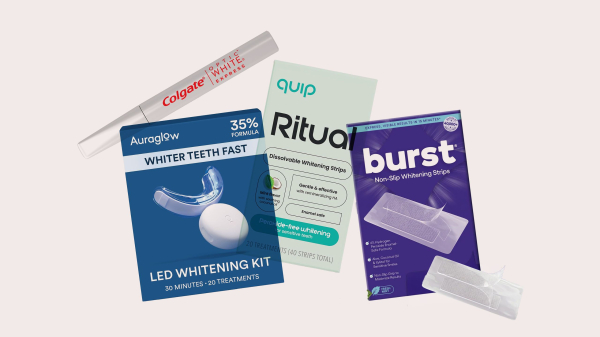
 Collage: Jemeria Davison; Source images: Courtesy of brandsSave this storySave this story
Ideally, brushing your teeth every day would be enough to keep them pearly white. But for those with stubborn stains, the best at-home teeth-whitening kits can help you maintain a bright smile in between dentist visits. While a good whitening toothpaste can work to keep stains away on a day-to-day basis, these more potent kits typically use strips, trays, or a pen to deliver their whitening agents—usually hydrogen peroxide or carbamide peroxide—to your teeth. These ingredients come in lower concentrations than you’d get with in-office treatments, but they can still have noticeable results.
Just remember to keep your expectations realistic. “What’s important to understand is that whitening simply lifts stains from your teeth to bring your teeth back to their natural color,” says Sharon Huang, DDS, a cosmetic dentist in New York City. “It doesn’t make teeth look artificially white or opaque.” A good at-home teeth whitener won’t give you a mouthful of Chiclets, but it will brighten up your smile—and even remove the evidence of your cold brew habit.
Our Top At-Home Whitening Kits
- Best Whitening Strips: Crest 3D Whitestrips, $46
- Best Whitening Trays: Opalescence Go Whitening Trays, $84
- Best Whitening Pen: Colgate Optic White Express Teeth Whitening Pen, $26
- Best LED Device: Auraglow Teeth Whitening Kit, $48
- Best for Sensitive Teeth: Quip Ritual Dissolvable Teeth Whitening Strips, $40
- Best Flavored: Burst Non-Slip Whitening Strips, $20
Frequently Asked QuestionsLargeChevron
- How do you remove stains from teeth?
- How do teeth-whitening ingredients work?
- What are the differences between in-office whitening and over-the-counter whitening treatments?
- Any other considerations while shopping for teeth-whitening products?
- Am I a good candidate for over-the-counter teeth-whitening products?
- Can yellow teeth actually be whitened?
- What are the downsides of teeth whitening?
- Meet the experts
- How we test and review products
- Our staff and testers
Ready for a brighter smile? Check out the best teeth-whitening kits, as selected by experts and editors, below.
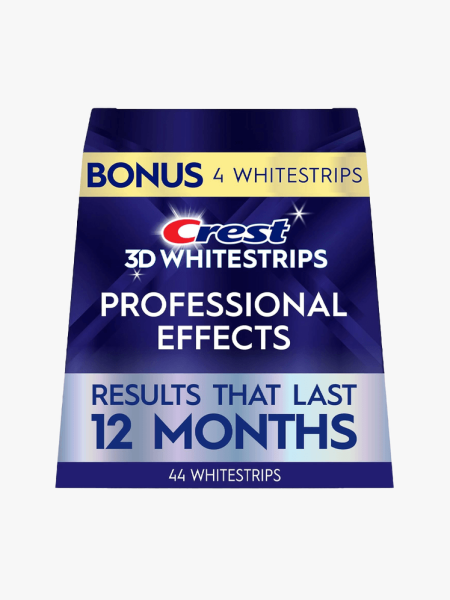
Best Whitening Strips: Crest 3D Whitestrips Professional Effects
 Save to wishlist
Crest
3D Whitestrips Professional Effects
Amazon
Why we love it: There's no doubt that Crest Whitestrips are one of the most recognizable over-the-counter teeth-whitening systems available. It seems as if they've been around forever, but professionals (and Allure Best of Beauty Award testers) still love them. "Over the counter, I recommend Crest 3D Whitestrips," says Neil Hadaegh, DDS, a board-certified cosmetic and restorative dentist in Beverly Hills, California. "A lot of my patients who naturally have whiter teeth or slightly discolored teeth are happy with the results," Dr. Hadaegh notes.
Giri Palani, DDS, a board-certified dentist in Beverly Hills and Palos Verdes, California, is also a fan of Crest’s teeth-whitening strips. "When people use strips properly, they can get very close to professional whitening," he says. One Best of Beauty tester found that was absolutely the case: With regular use (45 minutes a day for 20 days), these strips tackled years of drinking multiple coffees every day. To top it off, they didn’t aggravate her sensitive teeth.
More to know
LargeChevron
- Key ingredients: hydrogen peroxide
Best Whitening Trays: Opalescence Go Whitening Trays
 Save to wishlist
Opalescence
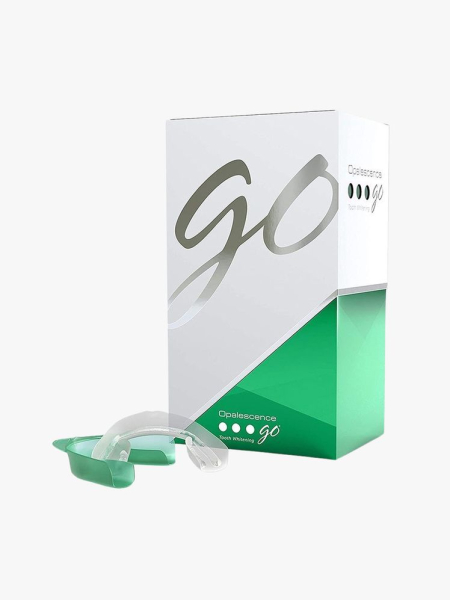
Go Whitening Trays
Amazon
Why we love it: Opalescence Go Whitening Trays are a crowd favorite among the cosmetic dentists we spoke to. They come in 10% or 15% hydrogen peroxide concentrations, and they even have flavor options: You can choose between refreshing Mint or Melon. "The whitening gel is dense and stays put while you wear the tray, which means less whitening gel [goes] on your tongue or down your throat," says Chrystle Cu, DDS, a board-certified dentist in San Mateo, California, and Cocofloss founder.
Meanwhile, Clement Kairouz, DDS, a cosmetic dentist based in New York and Dubai, likes these pre-filled trays for their user-friendly design and added ingredients. “The trays soften with body heat and mold to your teeth, so coverage is even instead of gapping, as a flat strip does,” he says. “They’ve also got potassium nitrate and fluoride built in, managing sensitivity and strengthening enamel while you whiten—most drugstore kits skip that.” Marina Gonchar, DMD, a board-certified dentist at Skin to Smile in Morristown, New Jersey, also gives Opalescence her stamp of approval, but recommends proceeding with caution: The higher-concentration formula delivers major results, but can increase tooth sensitivity with prolonged use, she says.
More to know
LargeChevron
- Key ingredients: hydrogen peroxide
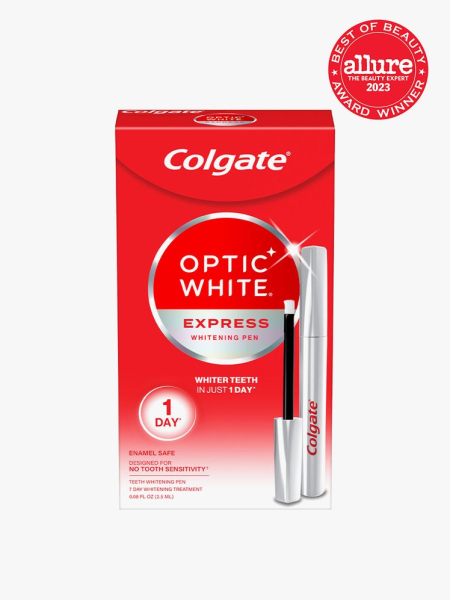
Best Whitening Pen: Colgate Optic White Express Teeth Whitening Pen
 Save to wishlist
Colgate
Optic White Express Teeth Whitening Pen
Amazon
Walmart
Why we love it: Our testers for the 2023 Best of Beauty Awards called Colgate’s Optic White Express Teeth Whitening Pen “the holy grail of teeth whitening," and for good reason: It's effective, fast, and easy to use. This ultra-portable pen contains 35 treatments, which rely on a simple formula consisting of alcohol solvent, copolymer, hydrogen peroxide, and water. Even better? It works its whitening magic within an hour: All you have to do is stay away from food during that time (but you can still drink water!), then brush off the dried film with water. For best results, Colgate recommends using the pen for a week, with three applications on the first day and two each day on days two to seven. But, if you're in a pinch, you'll see a noticeable difference in just one day (or three applications), which makes this the perfect pre-event treatment.
More to know
LargeChevron
- Key ingredients: hydrogen peroxide
Best LED Device: Auraglow Teeth Whitening Kit
 Save to wishlist
AuraGlow
Teeth Whitening Kit
Amazon
Walmart
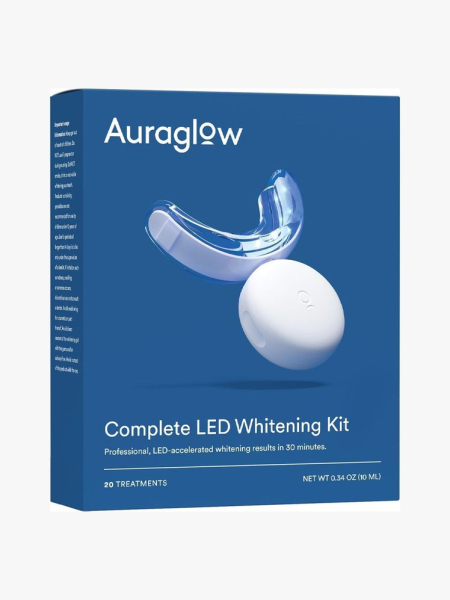
Why we love it: LED devices speed up the whitening process by pairing a time-tested whitening agent with LED light, which supposedly helps activate the agent. Pia Lieb, DDS, a board-certified cosmetic dentist based in New York City, recommends the AuraGlow Teeth Whitening Kit, noting that it's highly effective and more affordable than other LED whiteners out there. "This whitening solution comes with trays and an LED mouthpiece to comfortably whiten both your top and bottom teeth," Dr. Lieb says. "It also features 35% carbamide peroxide (most dental offices use a 40% peroxide formula), which is a testament to the great results this product produces." You should see improvements after one or two 30-minute sessions. After a week, your teeth should look 10 shades whiter, according to Auraglow.
More to know
LargeChevron
- Key ingredients: carbamide peroxide
Best for Sensitive Teeth: Quip Ritual Dissolvable Teeth Whitening Strips
 Save to wishlist
Quip
Ritual Dissolvable Teeth Whitening Strips
Amazon
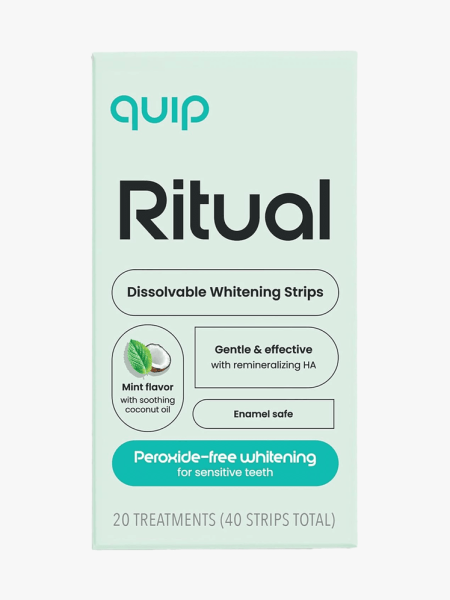
Why we love it: Quip’s Ritual Dissolvable Teeth Whitening Strips are a great alternative for people with teeth so sensitive that they can’t tolerate peroxide-based whiteners. Dr. Huang says this kit “takes a more thoughtful approach to whitening” by using hydroxyapatite to strengthen tooth enamel and pentasodium triphosphate and phthalimidoperoxycaproic acid (a.k.a. PAP) to break down stains. Compared to hydrogen peroxide, PAP is gentler, but similarly effective at removing stains (though research suggests that hydrogen peroxide is the better option for addressing deep discoloration). The strips also contain coconut oil to nourish and soothe your gums, so you get a brightness boost in the short term and healthier gums over time. “It’s also incredibly easy to use,” Dr. Huang says. “Just lick, stick, and the strip dissolves in 15 minutes.”
More to know
LargeChevron
- Key ingredients: phthalimidoperoxycaproic acid, pentasodium triphosphate
Best Flavored: Burst Non-Slip Whitening Strips
 Save to wishlist
Burst
Non-Slip Whitening Strips
Amazon
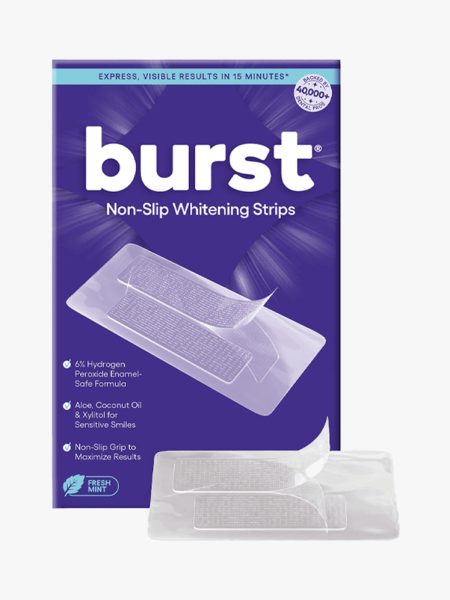
Why we love it: Burst’s Non-Slip Whitening Strips add a little zip to your dental routine with two fresh flavor options: mint and watermelon. Whichever option floats your boat, you’ll see improvements after your first 15-minute session (although you’ll get the max results if you use them every day for a week). In addition to hydrogen peroxide, these strips contain xylitol, which boosts saliva flow and neutralizes the acids in your mouth that can break down your enamel. As a result, these strips shouldn’t cause as much lingering sensitivity as other peroxide-based whiteners. Plus, they hug your teeth tightly to ensure even, thorough application over the surface of your teeth and to prevent them from slipping down. These strips are also formulated with soothing aloe and coconut oil, which may make them a good option for sensitive, inflammation-prone gums, according to Dr. Huang.
More to know
LargeChevron
- Key ingredients: hydrogen peroxide
Frequently Asked Questions
How do you remove stains from teeth?
"Tooth enamel [is] a crystal," Matthew J. Messina, DDS, a board-certified, Ohio-based dentist, and spokesperson for the American Dental Association (ADA), says. "If you were to look at tooth enamel under a really powerful microscope, [the structure] kind of looks like chicken wire" (or wire mesh). He explains that removing stains within the matrix of the tooth enamel is like getting out dirt stuck in chicken wire: "So what happens in whitening is we want to…open the matrix and bubble out that color, the stain, and then close it back up." That's where peroxide comes in.
How do teeth-whitening ingredients work?
Dr. Messina says peroxide causes the color bubbling to occur, so the active ingredient in whitening kits you buy will be hydrogen peroxide or carbamide peroxide (a diluted version of hydrogen peroxide). "Carbamide peroxide is used because it's a comparatively stable compound," Dr. Hadaegh says. "This helps the manufacturer to ensure product quality and consistency at the consumer’s end." Dr. Messina notes that aside from the peroxide, over-the-counter whitening products usually contain some additional ingredients to improve the taste.
What are the differences between in-office whitening and over-the-counter whitening treatments?
Peroxide is the main active ingredient in the products dentists use to do in-office whitening in their offices, too. The only difference is the concentration. "If we're doing something where we can mask off the gum tissue…where the gum tissues are protected, we can use a stronger whitening agent…because it's only touching the teeth," Dr. Messina says. "Something you're using over the counter has the potential to touch the gum tissues or be swallowed. So, we have to use a much lower strength of the active ingredient because…it might burn [the patient's] gum tissues."
Dentists carrying out professional treatments, on the other hand, "can take all the necessary precautions to make sure the gum tissue is safe and protected and the whitening agent is only getting on the tooth enamel that we want whiter." Ultimately, Dr. Messina says that all over-the-counter, peroxide-based whiteners will deliver comparable results as long as you follow the manufacturer's instructions for use. He says you can use it for 7 to 10 days to start, and then once every other week or so for maintenance.
Any other considerations while shopping for teeth-whitening products?
The most important thing to look for when you're shopping is ease of use, Dr. Palani says. "Also, you want to make sure that the product you buy has a good shelf life and store the product properly in the refrigerator to last longer," Dr. Palani adds.
Am I a good candidate for over-the-counter teeth-whitening products?
Consider taking a trip to the dentist for your standard teeth cleaning and consulting with them on your at-home whitening plans. "Tooth whitening is something that should only be done in a healthy mouth situation," he says. "If somebody has cavities or periodontal disease, or some other reason why their teeth aren't white, whitening is not the right choice for them—that's why it's always good to have a thorough examination done by your dentist before starting a whitening program."
Another benefit? If you use at-home whitening products after a dentist cleaning, Dr. Messina says you'll be whitening the tooth enamel rather than the tartar or buildup on top of it—so you'll achieve better results. Regardless, involving your dentist in the discussion is always a good idea.
Can yellow teeth actually be whitened?
Yellowing teeth are usually due to stains from coffee, tea, or wine, or a side effect of aging, Dr. Huang says. Luckily, these root causes “respond very well to whitening,” she says. Dr. Kairouz agrees with this, adding that graying teeth or teeth with banded staining (meaning horizontal stains that are embedded in the tooth) is a different story. These issues stem from antibiotics use or trauma to the teeth, and are much more difficult to address. Deeper, more stubborn yellow stains or discoloration are also better off being treated at your dentist’s office, Dr. Huang says.
What are the downsides of teeth whitening?
At-home whitening can increase your tooth sensitivity and irritate your gums, Dr. Huang says. It can also exacerbate existing issues, “like exposed roots or [gum] recession, which is why I always recommend making sure your teeth and gums are healthy before starting,” she says. Overuse can add to that sensitizing effect by thinning the enamel on your teeth, Dr. Kairouz notes. It can even “leave teeth looking grayer at the edges instead of brighter,” he adds. After you complete one course of your whitening kit, take a break for a week or two before considering starting another, as Dr. Messina recommended above.
It’s also important to note that teeth whiteners won’t have any effect on veneers, bonding, crowns, or fillings. “Whitening must be done with your current dental work in mind or be part of your new design,” Dr. Huang says.
Meet the experts
- Chrystle Cu, DDS, a board-certified dentist in San Mateo, California, and Cocofloss founder
- Marina Gonchar, DMD, board-certified dentist based in Morristown, New Jersey
- Neil Hadaegh, DDS, board-certified cosmetic and restorative dentist in Beverly Hills, California
- Sharon Huang, DDS, founder of Les Belles NYC Dentistry in New York City
- Clement Kairouz, DDS, cosmetic dentist based in New York and Dubai
- Pia Lieb, DDS, board-certified cosmetic dentist based in New York City
- Matthew J. Messina, DDS, board-certified dentist in Ohio
- Giri Palani, DDS, board-certified dentist in Beverly Hills and Palos Verdes, California
How we test and review products
When Allure tests a product, our editors look at it from every angle in an effort to best serve you. We review ingredients, scrutinize brand claims, and, when necessary, examine peer-reviewed scientific and medical studies. In addition to testing each and every product that's included in each and every review, we rely on experts who shape their fields, including dermatology, cosmetic chemistry, and medicine, to help us vet the ingredients and formulas.
For our list of the best at-home teeth-whitening products, we considered each product's performance across five primary categories: product ingredients and efficacy, packaging, ingredients, safety, and results. Every product was determined to have excelled in each category by our editorial team, which is composed of in-house writers and editors as well as contributors—along with special consideration from dentists. To learn more information on our reporting and testing processes, read our complete reviews process and methodology page.
Our staff and testers
A beauty product is a personal purchase. You might be searching for a face cream to address persistent dryness or a new nail product to add to your Sunday self-care routine; you may simply be browsing around for the latest launches to hit the hair market. No matter what you seek or your individual needs and concerns, Allure wants to ensure that you love anything we recommend in our stories. We believe that having a diverse team of writers and editors—in addition to the wide range of outside testers and industry experts we regularly call upon—is essential to reaching that goal.
After all, can we really say a skin-care product is the "best" for people over 50 if the only testers we've solicited opinions from folks who have yet to hit 30? Can we honestly deem a high-end diffuser worthy of your hard-earned cash if it's never been tested on curls? We're proud that our staff spans a wide range of ages, skin tones, hair textures, genders, and backgrounds, which means that we are able to fairly assess any beauty product that comes into the beauty closet.